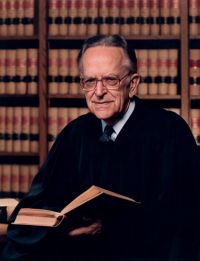
 Harry Blackmun,
Bowers v. Hardwick — Dissenting Opinion
(1986)
Harry Blackmun,
Bowers v. Hardwick — Dissenting Opinion
(1986)
“ Statutes banning public sexual activity are entirely consistent with protecting the individual's liberty interest in decisions concerning sexual relations: the same recognition that those decisions are intensely private which justifies protecting them from governmental interference can justify protecting individuals from unwilling exposure to the sexual activities of others. But the mere fact that intimate behavior may be punished when it takes place in public cannot dictate how States can regulate intimate behavior that occurs in intimate places. ”
