Summary

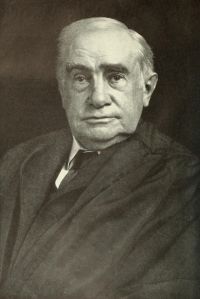
Portrait of Henry Billings Brown Henry Billings Brown Hale v. Henkel — Opinion of the Court

In my judgment when a grand jury, seeking, in the discharge of its public duties, to ascertain whether a corporation has violated the law in any particular, requires the production of the books, papers, and records of such corporation, no officer of that corporation can rightfully refuse, when ordered to do so by the court, to produce such books, papers, and records in his official custody, upon the ground simply that the order was, as to the corporation, an unreasonable search and seizure within the meaning of the 4th Amendment.
Source: Wikisource

Portrait of Henry Billings Brown Henry Billings Brown Hale v. Henkel — Opinion of the Court

If a corporation, when its affairs are under examination by a grand jury proceeding in its work under the orders of the court, can plead the immunity given by the 4th Amendment against unreasonable searches and seizures, may it not equally rely upon that Amendment to protect it even against a statute authorizing or directing the examination by the agents of the government creating it, of its papers, documents, and records, unless they specify the particular papers, documents, and records to be examined?
Source: Wikisource

Portrait of Henry Billings Brown Henry Billings Brown Hale v. Henkel — Opinion of the Court

United States is still recognized, and if its reasoning remains unimpaired, and the purpose and effect of the 4th Amendment receives illumination from the 5th, or, to express the idea differently, if the amendments are the complements of each other, directed against the different ways by which a man's immunity from giving evidence against himself may be violated, it would seem a strong, if not an inevitable, conclusion, that, if corporations have not such immunity, they can no more claim the protection of the 4th Amendment than they can of the 5th.
Source: Wikisource

Get perspective with Kwize: daily news enlightened by great literature