Summary

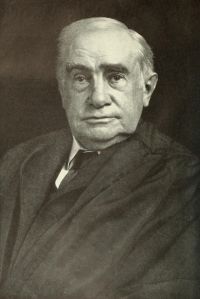
Portrait of Henry Billings Brown Henry Billings Brown Interstate Commerce Commission v…

In short, the substance of all these decisions is that railway companies are only bound to give the same terms to all persons alike under the same conditions and circumstances, and that any fact which produces an inequality of condition and a change of circumstances justifies an inequality of charge. These traffic acts do not appear to be as comprehensive as our own, and may justify contracts which with us would be obnoxious to the long and short haul clause of the act, or would be open to the charge of unjust discrimination.
Source: Wikisource

Portrait of Henry Billings Brown Henry Billings Brown Interstate Commerce Commission v…

If, for example, a railway makes to the public generally a certain rate of freight, and to a particular individual residing in the same town a reduced rate for the same class of goods, this may operate as an undue preference, since it enables the favored party to sell his goods at a lower price than his competitors, and may even enable him to obtain a complete monopoly of that business.
Source: Wikisource

Portrait of Henry Billings Brown Henry Billings Brown Interstate Commerce Commission v…

Prior to the enactment of the act of February 4, 1887, (24 St. p. 379,) to regulate commerce, commonly known as the 'Interstate Commerce Act,' railway traffic in this country was regulated by the principles of the common law applicable to common carriers, which demanded little more than that they should carry for all persons who applied, in the order in which the goods were delivered at the particular station, and that their charges for transportation should be reasonable. It was even doubted whether they were bound to make the same charge to all persons for the same service,-Railroad Co.
Source: Wikisource

Get perspective with Kwize: daily news enlightened by great literature