Summary

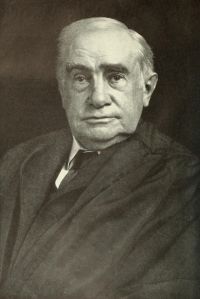
Portrait of Henry Billings Brown Henry Billings Brown Saxlehner v. Eisner Mendelson Company…

The right to individual appropriation once lost is gone forever.
If, upon the other hand, we assume that the case can be decided without reference to the law of Hungary or the decisions of its officers and courts, the plaintiff is still at a disadvantage by reason of not instituting her suits more promptly. Saxlehner knew, as a matter of fact, that the minister of agriculture had overruled his protest, and that the word 'Hunyadi' had become public property in the Kingdom of Hungary.
Source: Wikisource

Portrait of Henry Billings Brown Henry Billings Brown Saxlehner v. Eisner Mendelson Company…

It is not necessary to constitute an infringement that every word of a trademark should be appropriated. It is sufficient that enough be taken to deceive the public in the purchase of a protected article. It was said by Vice Chancellor Shadwell, in 1847, 'that if a thing contains twenty-five parts and but one is taken, an imitation of that one will be sufficient to contribute to a deception, and the law will hold those responsible who have contributed to the fraud.' Guinness v.
Source: Wikisource

Portrait of Henry Billings Brown Henry Billings Brown Saxlehner v. Eisner Mendelson Company…

Persistence then in the use is not innocent, and the wrong is a continuing one, demanding restraint by judicial interposition when properly invoked. Mere delay or acquiescence cannot defeat the remedy by injunction in support of the legal right, unless it has been continued so long and under such circumstances as to defeat the right itself, . . . nor will the issue of an injunction against the infringement of a trademark be denied on the ground that mere procrastination in seeking redress for depredations had deprived the true proprietor of his legal right.
Source: Wikisource

Get perspective with Kwize: daily news enlightened by great literature