Summary

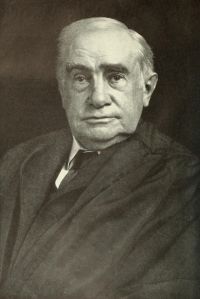
Portrait of Henry Billings Brown Henry Billings Brown Supreme Lodge Knights of Pythias v…

There seems to have been an attempt on the part of the defendant to invest Mr. Chadwick with the power and authority of an agent, and at the same time to repudiate his agency. But the refusal to acknowledge him as agent does not make him the less so, if the principal assume to control his conduct. It is as if a creditor should instruct his debtor to pay his claim to a third person, and at the same time declare that such third person was not his agent to receive the money.
Source: Wikisource

Portrait of Henry Billings Brown Henry Billings Brown Supreme Lodge Knights of Pythias v…

The very definition of an agent, given by Bouvier, as 'one who undertakes to transact some business, or manage some affair, for another, by the authority and on account of the latter, and to render an account of it' presupposes that the acts done by the agent shall be done in the interest of the principal, and that he shall receive his instructions from him. In this case the agent received his instructions from the Supreme Lodge, and his actions were, at least, as much for the convenience of the lodge as for that of the insured.
Source: Wikisource

Portrait of Henry Billings Brown Henry Billings Brown Supreme Lodge Knights of Pythias v…

Co. 17 Hun, 95, it was said of the agency clause: 'This is a provision which deserves the condemnation of courts, whenever it is relied upon to work out a fraud, as it is in this case. The policy might as well say that the president of the company should be deemed the president of the assured. . . . Such a clause is no part of a contract. It is an attempt to reverse the law of agency, and to declare that a party is not bound by his agent's acts. Whether one is an agent of another is a question of mixed law and fact, depending on the authority given expressly or impliedly.
Source: Wikisource

Get perspective with Kwize: daily news enlightened by great literature