Summary

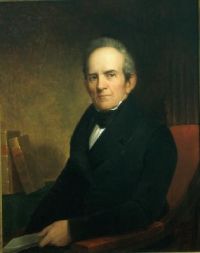
Portrait of Smith Thompson Smith Thompson The General Interest Insurance Company v…

There might be a moral duty resting on the master to communicate information of the lose to his owner. But how could there have been any legal obligation binding upon him to do it. The information could neither benefit nor prejudice the owner. It is a general rule of law, that if an injury arises to a principal, in consequence of the misconduct of his agent, an action may be sustained against him for the damage. Could an action in this case be sustained by the owner against the master for not giving him information of the loss?
Source: Wikisource

Portrait of Smith Thompson Smith Thompson The General Interest Insurance Company v…

He is not to be considered as the general agent of the owner for all purposes whatsoever, that may have connexion with the voyage. He is a special agent for navigating the vessel, and can neither bind nor prejudice his principal, by any act not coming properly within the scope and object of such employment. Unless the powers of agents are thus limited, no man could be safe in the transaction of any business through the agency of another. The master, in his character as such, had certainly no authority to procure insurance.
Source: Wikisource

Portrait of Smith Thompson Smith Thompson The General Interest Insurance Company v…

Cases may very esily be supposed, where negligence or misconduct in agents of underwriters, as to matters not immediately connected with effecting a policy, will still have a remote influence, which may have a tendency to prejudice the interest of the assured. Such cases, however, as well as those of the description now under consideration, will most likely be of rare occurrence, and nice and minute distinctions practically operate unfavourably on the business of insurance.
Source: Wikisource

Get perspective with Kwize: daily news enlightened by great literature