Summary

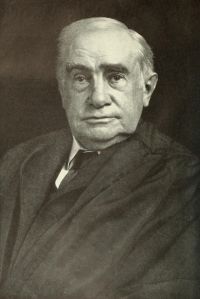
Portrait of Henry Billings Brown Henry Billings Brown Washburn Moen Manufacturing Company v…

Under such circumstances courts have not been reluctant to sustain a patent to the man who has taken the final step which has turned a failure into a success. In the law of patents it is the last step that wins. It may be strange that, considering the important results obtained by Kelly in his patent, it did not occur to him to substitute a coiled wire in place of the diamond-shaped prong; but evidently it did not; and to the man to whom it did, ought not to be denied the quality of inventor.
Source: Wikisource

Portrait of Henry Billings Brown Henry Billings Brown Washburn Moen Manufacturing Company v…

It is true that the affixing of barbs to a fence-wire does not apparently give a wide scope to the ingenuity of the inventor; but from the crude device of Hunt to the perfected wire of Glidden, each patent has marked a step in the progress in the art. The difference between the Kelly fence and the Glidden fence is not a radical one, but, slight as it may seem to be, it was apparently this which made the barbed-wire fence a practical and commercial success. The inventions of Hunt and Smith appear to be scarcely more than tentative, and never to have gone into general use.
Source: Wikisource

Portrait of Henry Billings Brown Henry Billings Brown Washburn Moen Manufacturing Company v…

The very fact, which courts as well as the public have not failed to recognize, that almost every important patent, from the cotton gin of Whitney to the one under consideration, has been attacked by the testimony of witnesses who imagined they had made similar discoveries long before the patentee had claimed to have invented his device, has tended to throw a certain amount of discredit upon all that class of evidence, and to demand that it be subjected to the closest scrutiny.
Source: Wikisource

Get perspective with Kwize: daily news enlightened by great literature