Summary

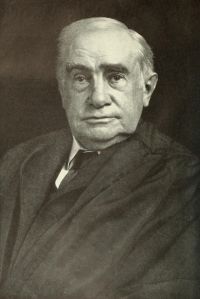
Portrait of Henry Billings Brown Henry Billings Brown Topliff v. Topliff (145 U.S. 156…

To hold that a patent can never be reissued for an enlarged claim would be not only to override the obvious intent of the statute, but would operate in many cases with great hardship upon the patentee. The specification and claims of a patent, particularly if the invention be at all complicated, constitute one of the most difficult legal instruments to draw with accuracy
Source: Wikisource

Portrait of Henry Billings Brown Henry Billings Brown Topliff v. Topliff (145 U.S. 156…

The object of the patent law is to secure to inventors a monopoly of what they have actually invented or discovered, and it ought not to be defeated by a too strict and technical adherence to the letter of the statute, or by the application of artificial rules of interpretation. The evidence in this case shows that plaintiffs were conceded by manufacturers a monopoly of this invention; that defendant was the only one who had infringed their patents; and that he did not begin to manufacture the infringing device until 1882,-six years after the second reissue was granted.
Source: Wikisource

Portrait of Henry Billings Brown Henry Billings Brown Topliff v. Topliff (145 U.S. 156…

In the Augur patent, the device described consists of a rod attached to the rear axle of a side spring buggy or other vehicle, having two links rigidly attached to the rod, one at each end thereof, upon which the rear ends of such side springs are pivoted. The result is that when one spring is depressed, as by a person stepping into the vehicle on one side, the spring upon the other side is also depressed, through the action of the rod connecting the two, so that the body of the vehicle is kept approximately upon a level.
Source: Wikisource

Get perspective with Kwize: daily news enlightened by great literature