Summary

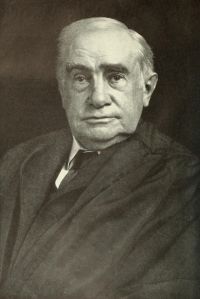
Portrait of Henry Billings Brown Henry Billings Brown Wiser v. Lawler — Opinion of the Court

If the property be now more valuable than the amount agreed to be paid, no reason is apparent why the tender should not have been accepted. If, as appears to be more probable, it is of less value, or wholly valueless, the defendants in refunding the amount paid would not only lose that amount, but all possibility of reselling the mines to other parties, and would thereby assume the risk of an unfortunate speculation, which the whole design of the sale was to impose upon the purchasers under the Cowland agreement, namely, the plaintiffs.
Source: Wikisource

Portrait of Henry Billings Brown Henry Billings Brown Wiser v. Lawler — Opinion of the Court

Putting the case in the most favorable light for the plaintiffs, it was only a case of estoppel by silence. Indeed, it was not even an ordinary case of estoppel by silence, but an estoppel by silence concerning facts of which defendants may have had no actual knowledge. To constitute an estoppel by silence there must be something more than an opportunity to speak. There must be an obligation. This principle applies with peculiar force where the persons to whom notice should be given are unknown.
Source: Wikisource

Portrait of Henry Billings Brown Henry Billings Brown Wiser v. Lawler — Opinion of the Court

Even if defendants had knowledge or notice that payments received by them on account of the purchase price were made from moneys raised from subscriptions to stock, there was no impropriety in receiving their money from the proceeds of the sales of the stock, although the contract specified only that they should be entitled to the proceeds of the ore mined. As they had agreed to sell their interests at $450,000, and Cowland had agreed to pay that amount, it may be assumed that this was the real value of the properties at that time.
Source: Wikisource

Get perspective with Kwize: daily news enlightened by great literature