Summary

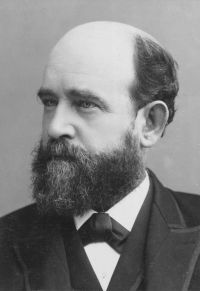
Portrait of Henry George Henry George Progress and Poverty (George)… (1879)

The rights of successive generations As for the deduction of a complete and exclusive individual right to land from priority of occupation, that is if possible the most absurd ground on which land ownership can be defended. Priority of occupation give exclusive and perpetual title to the surface of a globe on which, in the order of nature, countless generations succeed each other! Had the men of the last generation any better right to the use of this world than we of this?
Source: Wikisource

Portrait of Henry George Henry George Progress and Poverty (George)… (1879)

These are the natural rewards of labour. It is for the sake of the reaping that men sow; it is for the sake of possessing houses that men build. The ownership of land has nothing to do with it.
It is not the magic of property, as Arthur Young said, that has turned Flemish sands into fruitful fields. It is the magic of security to labour. This can be secured in other ways than by making land private property. The mere pledge of an Irish landlord that for twenty years he would not claim in rent any share in their cultivation induced Irish peasants to turn a barren mountain into gardens
Source: Wikisource

Portrait of Henry George Henry George Progress and Poverty (George)… (1879)

Is it not, primarily, the right of a man to himself, to the use of his own powers, to the enjoyment of the fruits of his own exertions? Is it not this individual right, which springs from and is testified to by the natural facts of individual organization - the fact that each particular pair of hands obey a particular brain and are related to a particular stomach; the fact that each man is a definite, coherent, independent whole - which alone justifies individual ownership? As a man belongs to himself, so his labour when put in concrete form belongs to him.
Source: Wikisource

Get perspective with Kwize: daily news enlightened by great literature