Summary

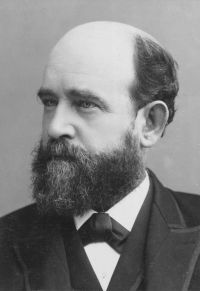
Portrait of Henry George Henry George Progress and Poverty (George)… (1879)

It is not because of competition that increasing productive power fails to add to the reward of labour; it is because competition is one-sided. Land is monopolized and the competition of producers for its use forces wages to a minimum and gives all the advantage of increasing productive power to landowners in higher rents and increased land values. Destroy this monopoly, and competition could only exist to accomplish the end that cooperation aims at - to give to each what he fairly earns. Destroy this monopoly, and industry must become the cooperation of equals.
Source: Wikisource

Portrait of Henry George Henry George Progress and Poverty (George)… (1879)

All that is claimed for cooperation in production is that it makes the workman more active and industrious - in other words, that it increases the efficiency of labour. Thus its effect is in the same direction as the steam engine, the cotton gin, the reaping machine - in short, all the things in which material progress consists - and it can produce only the same result, the increase of rent.
Source: Wikisource

Portrait of Henry George Henry George Progress and Poverty (George)… (1879)

The condition of those who live by their labour would ultimately not be improved. A dim consciousness of this pervades the masses. Those who have nothing but their labour care little about the prodigality of government, and in many cases are disposed to look upon it as a good thing - "furnishing employment," or "putting money in circulation." Let me be clearly understood. I do not say that governmental economy is not desirable, but simply that reduction in the expenses of government can have no direct effect in extirpating poverty and increasing wages, so long as land is monopolized.
Source: Wikisource

Get perspective with Kwize: daily news enlightened by great literature