Summary

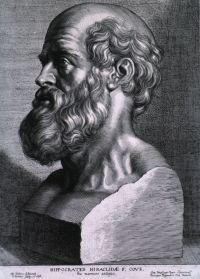
Portrait of Hippocrates Hippocrates,  The Book of Prognostics

“ Part I It appears to me a most excellent thing for the physician to cultivate Prognosis; for by foreseeing and foretelling, in the presence of the sick, the present, the past, and the future, and explaining the omissions which patients have been guilty of, he will be the more readily believed to be acquainted with the circumstances of the sick; so that men will have confidence to intrust themselves to such a physician. ”
Source: Wikisource

Portrait of Hippocrates Hippocrates,  The Book of Prognostics

“ The physician should also observe the appearance of the eyes from below the eyelids in sleep; for when a portion of the white appears, owing to the eyelids not being closed together, and when this is not connected with diarrhea or purgation from medicine, or when the patient does not sleep thus from habit, it is to be reckoned an unfavorable and very deadly symptom; but if the eyelid be contracted, livid, or pale, or also the lip, or nose, along with some of the other symptoms, one may know for certain that death is close at hand. ”
Source: Wikisource

Portrait of Hippocrates Hippocrates,  The Book of Prognostics

“ When any of the fevers is protracted, although the man exhibits symptoms of recovery, and there is no longer pain from any inflammation, nor from any other visible cause, in such a case a deposit, with swelling and pain, may be expected in some one of the joints, and not improbably in those below. Such deposits occur more readily and in less time to persons under thirty years of age; and one should immediately suspect the formation of such a deposit, if the fever be protracted beyond twenty days; but to aged persons these less seldom happen, and not until the fever be much longer protracted. ”
Source: Wikisource

Get perspective with Kwize: daily news enlightened by great literature