“ Hundreds of peasants made a frightful clamor like that on the shore of the river that memorable night, when twenty thousand stragglers were doomed to death or slavery by their own folly. At the cry, at the shot, the countess sprang from the carriage, and ran, with delirious emotion, over the snow to the banks of the river; she saw the burned bivouacs and the charred remains of the bridge, and the fatal raft, which the men were launching into the icy waters of the Beresina. The major, Philippe, was there, striking back the crowd with his sabre. ”
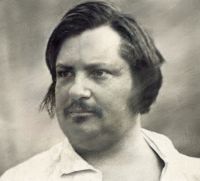
Honoré de Balzac
Summary
“Adieu”, is a work by Honoré de Balzac. It explores elements such as Stephanie, countess and Studzianka.
Quotes from Adieu (Honoré de Balzac)
“ From time to time she gave a sigh, and that sigh, which had all the semblance of sensibilities, made the unhappy colonel tremble with hope. “Alas!” said Monsieur Fanjat, “do not deceive yourself, monsieur; there is no meaning in her sigh.” Those who have ever watched for hours with delight the sleep of one who is tenderly beloved, whose eyes will smile to them at waking, can understand the sweet yet terrible emotion that shook the colonel’s soul. To him, this sleep was an illusion; the waking might be death, death in its most awful form. ”
“ The apathy of these poor soldiers can only be conceived by those who remember to have crossed vast deserts of snow without other perspective than a snow horizon, without other drink than snow, without other bed than snow, without other food than snow or a few frozen beet-roots, a few handfuls of flour, or a little horseflesh. Dying of hunger, thirst, fatigue, and want of sleep, these unfortunates reached a shore where they saw before them wood, provisions, innumerable camp equipages, and carriages,—in short a whole town at their service. ”
