Summary

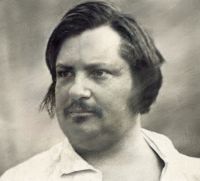
Portrait of Honoré de Balzac Honoré de Balzac The Physiology of Marriage — First Part… (1829)

During the hours which she spends in private, in pleasure, and in the care of her person, she amuses herself by caroling the sweetest strains. For her France and Italy ordain delightful concerts and Naples imparts to the strings of the violin an harmonious soul. This species is in fine at once the queen of the world and the slave of passion. She dreads marriage because it ends by spoiling her figure, but she surrenders herself to it because it promises happiness. If she bears children it is by pure chance, and when they are grown up she tries to conceal them.
Source: Wikisource

Portrait of Honoré de Balzac Honoré de Balzac The Physiology of Marriage — First Part… (1829)

Has she the needs of other species? It is a problem. Although she is curious to excess she allows herself easily to be caught by any one who can conceal from her the slightest thing, and her intellect leads her to seek incessantly after the unknown. Love is her religion; she thinks how to please the one she loves. To be beloved is the end of all her actions; to excite desire is the motive of every gesture. She dreams of nothing excepting how she may shine, and moves only in a circle filled with grace and elegance.
Source: Wikisource

Portrait of Honoré de Balzac Honoré de Balzac The Physiology of Marriage — First Part… (1829)

These several rebates will reduce our sum total to eight hundred thousand women, when we come to calculate the number of those who are likely to violate married faith. Who would not at the present moment wish to retain the persuasion that wives are virtuous? Are they not the supreme flower of the country? Are they not all blooming creatures, fascinating the world by their beauty, their youth, their life and their love? To believe in their virtue is a sort of social religion, for they are the ornament of the world, and form the chief glory of France.
Source: Wikisource

Get perspective with Kwize: daily news enlightened by great literature