Summary

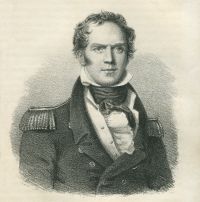
Portrait of Hugh Clapperton Hugh Clapperton Journal of a second expedition into the interior of Africa… (1829)

The chief of Ingaskie, the second town in Youri, only a day’s journey distant, sent me a present of a sheep, some rice, and a thousand gora nuts, for which he expects double the amount in return. The women were dressed and painted to the height of Nyffé perfection; and the young and modest on this day would come up and salute the men as if old acquaintances, and bid them joy on the day; with the wool on their heads dressed, plaited, and dyed with indigo
Source: Gutenberg

Portrait of Hugh Clapperton Hugh Clapperton Journal of a second expedition into the interior of Africa… (1829)

The poor girls, their slaves, are compelled to travel with a heavy load on their heads, yet are as cheerful and good-natured as if they were at home grinding corn in their own native country. The road lay over a level plain covered with trees; the soil a red clay, with gravel and ore, among rocks of clay ironstone, appearing, from the softer parts, to have been washed or worn away, as if it had undergone the action of fire. We halted near to a small rainy-season stream, in which were pools of water. Here and there saw numerous traces of the large antelopes, buffaloes, and elephants.
Source: Gutenberg

Portrait of Hugh Clapperton Hugh Clapperton Journal of a second expedition into the interior of Africa… (1829)

The sultan made a great many inquiries about England, and asked me two or three times if I had not come to buy slaves. I laughed in his face, and told him there was nothing we so much abhorred in England as slavery; that the king of England did every thing to prevent other nations buying slaves; that the slave trade was the ruin of Africa; that Yourriba presented nothing but ruined towns and deserted villages, and all caused by the slave-trade; that it was very bad to buy and sell men like bullocks and sheep.
Source: Gutenberg

Get perspective with Kwize: daily news enlightened by great literature