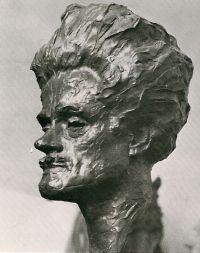
Hugh MacDiarmid

Hugh MacDiarmid

Summary

Portrait of Hugh MacDiarmid Hugh MacDiarmid Albyn; or, Scotland and the future (1927)

What is commonly forgotten, too, in matters of this kind, is that Scotland itself is part of the Empire. A concern with Scottish domestic welfare is just as much an Imperial consideration as preoccupation with the affairs of any other part of the Empire. The welfare of the Empire depends upon the welfare of each of its component parts. Scotsmen may help the Empire best by keeping the heart of it—the source of much that is best in it—sound at home. Surely it cannot be contended that Imperial policy demands the dereliction of Scotland?
Source: Gutenberg

Portrait of Hugh MacDiarmid Hugh MacDiarmid Albyn; or, Scotland and the future (1927)

There is more in this Scottish antithesis of the real and fantastic than is to be explained by the familiar rules of rhetoric. This mingling, even of the most eccentric kind, is an indication to us that the Scot, in that mediæval fashion which takes all things as granted, is at his ease in both ‘rooms of life,’ and [23] turns to fun, and even profanity, with no misgivings. For Scottish literature is more mediæval in habit than criticism has suspected, and owes some part of its picturesque strength to this freedom in passing from one mood to another.
Source: Gutenberg

Portrait of Hugh MacDiarmid Hugh MacDiarmid Albyn; or, Scotland and the future (1927)

Under this heading the Scottish people are revealed as a leaderless mob in whom national pride has been strangled. They regard, unmoved, the spectacle of their monstrous slum-evil, the decay of their industries, the devastation of their countryside. This is the most compact and mordant indictment of Scottish policy that has yet been written.
Source: Gutenberg

Get perspective with Kwize: daily news enlightened by great literature