Summary

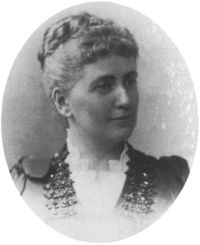
Portrait of Ida Craddock Ida Craddock Heavenly Bridegrooms — May 1916 (1918)

Now to laugh to scorn the birth of Perseus from the occult union of God with one virgin, and then to accept without question the birth of Jesus from the occult union of God with another virgin, is somewhat inconsistent. On strictly logical grounds, if one story be false, so may the other be false; if one be true, so may the other be true. But Perseus is only one of many virgin-born heroes or gods. We find thesechildren of a visible earthly mother and an invisible, celestial mysterious father, the world over, in all ages.
Source: Wikisource

Portrait of Ida Craddock Ida Craddock Heavenly Bridegrooms — May 1916 (1918)

The month of May (so nearly like the name of Maia) was sacred to some of the virgin-goddesses of ancient times, as it is now to Mary, the Mother of Jesus. The Christian Virgin Mary was also called Myrrha; and she is still called Santa Maria in Southern Europe and in Mexico. The title bestowed on her of "Star of the Sea" a title given to the Egyptian Virgin-mother, Isis, perhaps two thousand years earlier shows how close a resemblance tradition and folklore have traced between both of these virgin-mothers and the ancient genitrix of the waters.
Source: Wikisource

Portrait of Ida Craddock Ida Craddock Heavenly Bridegrooms — May 1916 (1918)

Am I not right in saying that to impugn the possibility of marital relations between earthly women and heavenly bridegrooms is to strike at the very foundations of Christianity?
In folklore customs and fairy tales, fantastic though these may be, we find numerous indications of the world-wide belief in bridegrooms and brides from the unseen world of spiritual beings, or, as they were termed in the middle ages, incubi and succubae.
Source: Wikisource

Get perspective with Kwize: daily news enlightened by great literature