Summary

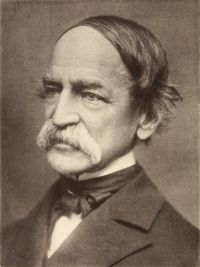
Portrait of Isaac N. Arnold Isaac N. Arnold The Life of Abraham Lincoln — Chapter VI (1885)

The anti-slavery party, small in numbers, yet full of fiery zeal and ardor, and counting in its ranks much of the culture and intellect of the nation, grappled with a power which at that time controlled the national and nearly all the state governments, which dominated both the great parties, ruled the churches, the press, and the financial and business interests of the country; a power whose social influence was almost omnipotent. It held the press and the sword of the nation, and filled every office, from that of village postmaster to that of President.
Source: Wikisource

Portrait of Isaac N. Arnold Isaac N. Arnold The Life of Abraham Lincoln — Chapter VI (1885)

It is true, that the love of freedom nurtured by the free schools and literature of New England, beginning like the source of her great rivers among her granite hills, expanded like those rivers, until it became a mighty stream, but it was the broad and majestic torrent from the Northwest, which, like its own Mississippi, gave to the current of freedom, volume and power and irresistible strength, until it broke down all opposition and swept away all resistance.
Source: Wikisource

Portrait of Isaac N. Arnold Isaac N. Arnold The Life of Abraham Lincoln — Chapter VI (1885)

But the antagonism between free and slave labor produced a great conflict of ideas, growing more and more earnest and fierce, until it ended in a tremendous conflict of arms. Let us briefly sketch the history of this anomaly of slavery in a nation, which, in the words of Lincoln, was "conceived in liberty and dedicated to the proposition that all men are created equal," and embodying in its Declaration of Independence, the great charter of human rights.
Source: Wikisource

Get perspective with Kwize: daily news enlightened by great literature