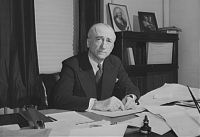
 James F. Byrnes,
Chrysler Corporation v. United States…
James F. Byrnes,
Chrysler Corporation v. United States…
“ Nothing in paragraph 12 gave, or even purported to give, Chrysler any immunity from the anti-trust laws after January 1, 1941. Therefore, if the decree were not modified, it would not mean that the Government would be powerless to proceed against Chrysler if the latter resumed the activities forbidden by the decree. The Government would still be free to take any action it might have taken before Chrysler consented to the decree against it.A court of equity is not just an umpire between two litigants. In a very special sense, the public interest is in its keeping as the conscience of the law. ”
