Summary

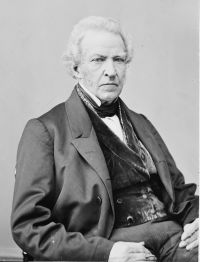
Portrait of James Moore Wayne James Moore Wayne Waring v. Clarke — Opinion of the Court

In that construction, it meant not only high sea, but arms of the sea, waters flowing from it into prots and havens, and as high upon rivers as the tide ebbs and flows. We think in the controversy between the courts of admiralty and common law, upon the subject of jurisdiction, that the former have the best of the argument; that they maintain the jurisdiction for which they contend with more learning, more directness of purpose, and without any of that verbal subtilty which is found in the arguments of their adversaries.
Source: Wikisource

Portrait of James Moore Wayne James Moore Wayne Waring v. Clarke — Opinion of the Court

We will now consider the proposition, that the test against admiralty jurisdiction in England and the United States is the competency of a court of common law to give a remedy in a given case in a trial by jury; or that in all cases, except in seamen's wages, where the courts of common law have a concurrent jurisdiction with the admiralty, and can try the cause and give redress, that alone takes away the admiralty jurisdiction.
Source: Wikisource

Portrait of James Moore Wayne James Moore Wayne Waring v. Clarke — Opinion of the Court

But there is no provision, as the constitution originally was, from which it can be inferred that civil causes in admiralty were to be tried by a jury, contrary to what the framers of the constitution knew was the mode of trial of issues of fact in the admiralty. We confess, then, we cannot see how they are to be embraced in the seventh amendment of the constitution, providing that in suits at common law the trial by jury should be preserved. Cases under twenty dollars are not so provided for.
Source: Wikisource

Get perspective with Kwize: daily news enlightened by great literature