Summary

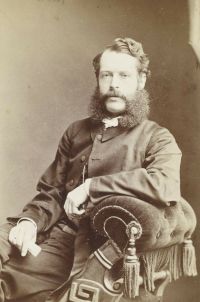
Portrait of James Sibree James Sibree 1911 Encyclopædia Britannica, Volume 17… (1911)

Fauna.—The fauna of Madagascar, while deficient in most of the characteristic tropical forms of life, is one of great interest to the naturalist from its remote affinities, much of its animal life having Asiatic rather than African relationships. The central portions of the island, from their generally bare and treeless character, are poor in living creatures; but the lower country, and especially the forests and coast plains, are fairly well stocked. But it is noticeable that many species have a very limited range.
Source: Wikisource

Portrait of James Sibree James Sibree 1911 Encyclopædia Britannica, Volume 17… (1911)

No one tribe seems to have gained any great ascendancy over the rest until about the middle of the 17th century, when a small but warlike people called Sàkalàva, in the south-west of Madagascar, advanced northward, conquered all the inhabitants of the western half of the island, as well as some northern and central tribes, and eventually founded two kingdoms which retained their supremacy until the close of the 18th century.
Source: Wikisource

Portrait of James Sibree James Sibree 1911 Encyclopædia Britannica, Volume 17… (1911)

Not long afterwards the authority of France was recognized throughout the island. General Gallieni, whose firm and vigorous administration, and desire to treat the Malagasy justly and kindly, made him liked by the people, retired in 1905, and was succeeded in that office by M. Victor Augagneur, late mayor of Lyons. Since the French occupation the Malagasy have conformed pretty readily to the new order of things, although many of the most intelligent Hòva deeply regret that their country did not retain its independence. Justice is administered, on the whole, with fairness and impartiality
Source: Wikisource

Get perspective with Kwize: daily news enlightened by great literature