“ Traces of white cassava flour were still mingled with the fine dust on the floor. The place where Atiba had drawn Shango's sign was . . . she squinted in the candlelight . . . was there, near the square comer of the iron frame. Nothing remained now of the symbol save a scattering of pale powder. But across the room, near the post by the doorway, lay the small bag of cassava flour he had used. It must, she told herself, have been knocked there during the ceremony. ”
Cassava
Definition and stakes
Cassava, a starchy root vegetable native to South America, has long been a staple crop in tropical regions, prized for its resilience and adaptability. From David Livingstone’s observations of its prevalence in Central African villages to Aimé Bonpland’s notes on its importance as a dietary mainstay in South America, the plant emerges as a symbol of sustenance and adaptability.
Richard Folkard’s botanical descriptions and Thomas Whiffen’s accounts of its culinary use highlight its cultural and nutritional value, while Johann David Wyss connects it to survival themes in The Swiss Family Robinson. These diverse perspectives emphasize cassava’s dual function as both a practical resource and a means of exploring human interaction with the natural world.
Quotes about “cassava”
Richard Folkard, Plant Lore, Legends, and Lyrics
“ The negroes of the West Indies say a branch of the Cashew-tree supplied the crown of Thorns used at our Saviour’s crucifixion, and that, in consequence, one of the bright golden petals of the flower became black and blood-stained.CASSAVA.—The South American Cassava (Jatropha Manihot) is also known as the edible-rooted physic-nut, and in Brazil it bears the name of Mandioc. There are two kinds of Cassavas—the bitter and the sweet. From the roots of both bread is made, the tubers being first peeled and then ground into farina, and a poisonous juice expressed. ”
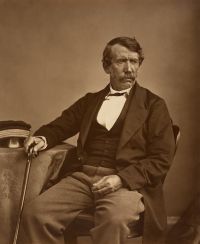
David Livingstone,
The Last Journals of David Livingstone…
“ Neither goats, sheep, nor cattle thrive here, so the people are confined to fowls and fish. Cassava is very extensively cultivated, indeed, so generally is this plant grown, that it is impossible to know which is town and which is country: every hut has a plantation around it, in which is grown cassava, Holcus sorghum, maize, beans, nuts. ”
René Caillié,
Travels through Central Africa to Timbuctoo and across the Great Desert to Morocco performed in the year 1824-1828…
(1830)
“ The women in this country have an unusual share of curiosity. They came to see me, and gave me cassava. Some of them knelt down when they presented it to me.Popoco is situated in a fertile plain. The soil is a kind of black sand. The village is large, containing between one hundred and fifty and two hundred slaves, who are employed in agriculture. I saw cassava, yams, and pistachios, thriving well. The inhabitants also grow a considerable quantity of rice and millet. At a little distance from the village there are some orange-trees. ”
Aimé Bonpland,
Personal Narrative of Travels to the Equinoctial Regions of America…
“ A man who hewed building timber in the forests on the coast of Paria was paid at Cumana 45 to 50 sous a day, without his food. A carpenter gained daily from 3 to 6 francs in New Andalusia. Three cakes of cassava (the bread of the country) , 21 inches in diameter, 1 1/2 lines thick, and 2 1/2 pounds weight, cost at Caracas one half-real, or 6 1/2 sous. A man eats daily not less than 2 sous' worth of cassava, that food being constantly mixed with bananas, dried meat (tasajo) and panelon, or unrefined sugar.) ”
Mrs. Cecil Clementi, Through British Guiana to the summit of Roraima
“ Indians are very fond of tame birds, but do not keep them in cages. They fly about as they like. These villagers were Makusis, and appeared very friendly. Our droghers were revived and gay, having had overnight a feast of cassava and cassiri. Cassiri, which is a drink made from cassava, has a magical effect on these people. It seems to cheer without inebriating—in fact, it has rather the effect which a cup of good tea or coffee has on a tired European.Our road for a couple of hours now lay over the glorious grass plateau which forms part of Mr. Menzies’ ranch. ”
William Bingley, Useful Knowledge: Volume 2. Vegetables
“ With the natives of South America, it is not unusual to throw a great number of cakes of cassava together to heat, after which they soak them in water, which causes a rapid fermentation to take place; and from the liquor thus obtained, they make a very sharp and disagreeable, but intoxicating beverage, which will not keep longer than twenty-four hours without spoiling.From the pure flour of cassava is formed the substance called tapioca, which is frequently imported into this country, and is used for jelly, puddings, and other culinary purposes. ”
David Livingstone,
The Last Journals of David Livingstone…
“ Two traders got the same return present from him that I did, namely, one goat and some fish, meal and cassava. I am always ill when not working; I spend my time writing letters, to be ready when we come to Ujiji. (18th December, 1867.) We have been here a month, and I cannot get more than two lunars: I got altitudes of the meridian of stars north and south soon after we came, but not lunars. Casembe sent a big basket of fire-dried fish, two pots of beer, and a basket of cassava, and says we may go when we choose. ”
Thomas Whiffen, The North-West Amazons: Notes of some months spent among cannibal tribes
“ Among the Boro and Witoto the manioc water is boiled till it thickens, and is then used as a sauce into which the cassava is dipped before it is eaten. Another way of eating cassava is to dip it in soup. The Boro on the Japura concoct a sauce of the consistency of paste by seasoning the manioc water with peppers and fish. [186] Though the tuber is the most valuable portion of the plant it is not the only part used for food. The leaves may be eaten as a vegetable. ”
Johann David Wyss,
The Swiss Family Robinson; or Adventures in a Desert Island
“ Of this root they make in the West Indies a sort of bread, called cassava bread. In its natural state it contains a violent poison, but by a process of heating it becomes wholesome. The nutritious tapioca is a preparation from this root.”By this time we had unloaded, and proceeded to the shore to bring a second load before night came on. We brought up two chests of our own clothes and property, some chests of tools, the cart-wheels, and the hand-mill, likely now to be of use for the cassava. After unloading, we sat down to an excellent supper of turtle, with potatoes, instead of bread. ”
William La Varre, Up the Mazaruni for Diamonds
“ The colors had run and there were pink dough and dough-covered arrows and pink smoked meat and sticky, cassava dough enameled shirts. It was a great mess, but the Indians scraped the dough together to dry out in the sun the next day and worried not at all, for the cassava dough would all dry and be rubbed off their belongings.While the Indians like the white men, they do not like the blacks. They get along with them all right because they have nothing whatever to do with the “Me-go-ro-man” as they call them. Our blacks, as usual, had their three shelters a distance from ours. ”
John H. Weeks, Among Congo cannibals (1913)
“ When cassava roots are dug up from the farm they are put into a water-hole to soak for a few days until they become soft. Should a woman find that her roots are being stolen from the hole she takes a piece of gum copal, and fixing it in the cleft of a split stick she puts it on the side of her cassava hole, and at the same time calls down a curse on the thief. Should the thief be a man he will henceforth have no luck in fishing, 311and should it be a woman she will have no more success in farming. ”
Aimé Bonpland,
Personal Narrative of Travels to the Equinoctial Regions of America…
“ In fact, these vachacos furnish subsistence to the Indians of the Rio Negro and the Guainia. They do not eat the ants as a luxury, but because, according to the expression of the missionaries, the fat of ants (the white part of the abdomen) is a very substantial food. When the cakes of cassava were prepared, Father Zea, whose fever seemed rather to sharpen than to enfeeble his appetite, ordered a little bag to be brought to him filled with smoked vachacos. He mixed these bruised insects with flour of cassava, which he pressed us to taste. ”
Georg August Schweinfurth,
The heart of Africa, Vol. 2 (of 2…
(1873)
“ We spent our first night close to the farms of Barraga, a spot which seemed especially remarkable for the clusters of trophies, all covered with the skulls of baboons. Everywhere there seemed to be an extensive cultivation of cassava, a product of the soil that seems hardly known at all to the Bongo. Many things that I saw in their cultivation bore evidence to their comparatively recent migration from the country of the Niam-niam. ”
R. G. Latham, The Ethnology of the British Colonies and Dependencies
“ Now the sitting posture is common to [263] the Peruvians, the Oregon Indians, and numerous tribes of Brazil; indeed, Morton considers it to be one of the most remarkable characteristics of the Red Man of America in general.The Arawak custom is peculiar. When a man of note dies his relations plant a field of cassava; just as the Nicobar Islanders plant a cocoa-nut tree. Then they lament loudly. But when twelve moons are over, and the cassava is ripe, they re-assemble, feast, dance, and lash each other cruelly, and severely with whips. ”
Aimé Bonpland,
Personal Narrative of Travels to the Equinoctial Regions of America…
“ A little cassava and a few plantains only are cultivated; and when the fishery is not abundant, the natives of a country so favoured by nature are exposed to the most cruel privations.The pilots of the small number of boats that go from the Rio Negro to Angostura by the Cassiquiare are afraid to ascend as far as Esmeralda, and therefore that mission would have been much better placed at the point of the bifurcation of the Orinoco. ”
Charles Waterton,
Wanderings in South America
“ The frequency of the brewing depends upon the superabundance of cassava. Both men and women go without clothes. The men have a cotton wrapper, and the women a bead-ornamented square piece of cotton about the size of your hand for the fig-leaf. Those far away in the interior use the bark of a tree for this purpose. They are a very clean people, and wash in the river or creek at least twice every day. They paint themselves with the roucou, sweetly perfumed with hayawa or accaiari. ”
Sir Richard Henry Bonnycastle, Spanish America, Vol. 1 (of 2)
“ Cassava or manioc root, and maize, form the bread of the Indians. European wheat is cultivated by the Spaniards and their descendants, and the tropical and European plants and vegetables are produced in as much abundance as they are in New Spain. The rivers and lakes are well stored with fish, and the woods and plains with game. The animals are such as are common to all South America, and will be noticed in the provincial descriptions; in this kingdom the inhabitants breed immense numbers of horses and mules, which they sell in Peru. ”
David Livingstone,
The Last Journals of David Livingstone…
“ The soil is very rich. Casembe's ground-nuts are the largest I have seen, and so is the cassava. I got over a pint of palm oil for a cubit of calico.A fine young man, whose father had been the Casembe before this one, came to see us; he is in the background now, otherwise he would have conducted us to the village: a son or heir does not succeed to the chieftainship here.21st November, 1867.—The River Lundé was five miles from Chungu. It is six yards wide where we crossed it, but larger further down ”
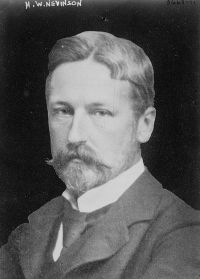
Henry Woodd Nevinson,
A Modern Slavery
(1906)
“ For about a hundred miles inland from Loanda, the country is flattish and bare and dry, though there are occasional rivers and a sprinkling of trees. A coarse grass feeds a few cattle, but the chief product is the cassava, from which the natives knead a white food, something between rice and flour. As you go farther, the land grows like the “low veldt” in the Transvaal, and it has the same peculiar and unwholesome smell. By degrees it becomes more mountainous and the forest grows thick, so that the little railway seems to struggle with the undergrowth almost as much as with the inclines. ”
James P. Boyd, Stanley in Africa
“ The queen is a thorough agriculturist, and pays particular attention to her fields of cassava, sweet-potatoes, maize, sorghum, millet, ground-nuts and cotton. The people as a whole are rough mannered and positively brutal among themselves. Livingstone spent a month among them, before he could get an escort to take him through the swamps to the southern end of Moero, which he was anxious to explore further.The Cassembe, like many other tribes on the head waters of the Congo, procure copper ore from Kantanga, on the west, and work it into bracelets, anklets and fine wire for baskets and traps. ”
Aimé Bonpland,
Personal Narrative of Travels to the Equinoctial Regions of America…
“ This cultivation requires little care; while, in a country where there are no other roads than rivers, the life of the hunter is laborious and difficult. The Guamos of the mission of Santa Barbara could not furnish us with the provision we wanted. They cultivate only a little cassava. ”
William Henry Giles Kingston,
A Voyage round the World
“ They quickly take root, and, sending forth shoots from the buds, are in two years fit again to dig up. The mandioca is called cassava in some countries. The press used by the Indians is a simple and most ingenious contrivance. It is made by the Indians wherever the plant is grown. ”
Leonard V. Dalton, Venezuela (1912)
“ The main stream and its affluents alike flow through great forests, and the immediate neighbourhood of the Casiquiare being level, the valley is damp and abounds in small lakes and swamps.There is abundant rubber in the forests, but the life of the inhabitants of the small settlements, which are mainly supported by this industry, is a miserable one. They live chiefly on cassava, accompanied by much alcohol in one form or another, from champagne to raw sugar spirit ”
Joseph Corry, Observations Upon the Windward Coast of Africa
“ The rice-fields or lugars are prepared during the dry season, and the seed is sown in the tornado season, requiring about four or five months growth to bring it to perfection.Yams, a nutritious substance, known in the West Indies.Cassada or cassava, a root, of a pleasant taste when roasted or boiled, and makes an excellent cake, superior in whiteness to flour.Papaw, of a deep green in its growth, but yellqw when ripe, and is an excellent dish when boiled; its leaves are frequently used by the natives for soap; ropes are made of the bark. ”
Beatrice Grimshaw,
A Cassowary and a Hymn-Book
(1914)
“ When I had left the Marquis in his room I waited for a little while and then went straight back to Mrs. Vandaleur's. I found her alone on the veranda; and this time, all her rouge could not conceal the sudden paleness that crept like a white mist over her pretty face when she saw me return alone. “I am flattered,” she said. “To what do I owe the honor of this—very late—call?" I looked her straight in the eyes. “What will you take for your cassowary?” I said. “Your cassowary that is sick—though it doesn't look it—and that will probably die in a day or two, suddenly?” ”
Sir Samuel White Baker,
The Albert N'Yanza, Great Basin of the Nile…
“ There was little sleep that night, as all the luggage had to be packed in readiness for the early start. Cassave, who could always be depended upon, arrived at my hut, and told me that messengers had reported that the M'was had swept everything before them, having captured all the women and cattle of the country and killed a great number of people; that they had seen the light of burning villages from Kamrasi's camp, and that it was doubtful whether the route was open to Atada. I suggested that men should be sent on in advance, to report if the path were occupied: this was immediately done. ”
Anonymous, Cassell's History of England, Vol…
“ They found that their pretender, Don Antonio, was everywhere treated as a pretender—not a man would own him; and they marched to Cascaes, which they found already plundered by Drake and his squadron. They there embarked for England, but were soon dispersed by a storm, and reached Plymouth in straggling disorder, one of the sections of the fleet having, before leaving Spain, plundered the town of Vigo. It was found that out of their 21,000 men, they had lost one-half. Out of the 1,100 gentlemen who accompanied the expedition one-third had perished. ”
Emma Marshall,
No. XIII; or, The Story of the Lost Vestal
“ Wherefore such dolorous looks, young Casca? I am in the highest spirits. What think you? I am chosen for the race to-morrow, and I will win, too. Your pardon, fair Hyacintha. I did not perceive you in the shadow of the curtain. What ails you, Casca?” [27] “Weariness of myself and life, that is all,” the boy said; “you are in its full zest and enjoyment, while I——”“Pish! what folly! The best time is coming. Why, as soon as you wear the toga virilis you will feel the man. ”
David Carnegie Andrew Agnew, Protestant Exiles from France… (1886)
“ The eldest son, Jean, is the head of the Cazenoves in America. After 1703 M. Pierre Cazenove of Geneva had a third and a fourth son, named Theophile and David. Theophile married Marie, daughter of the illustrious Paul de Rapin, Seigneur de Thoyras, and founded the Cazenoves of Holland; his son Frederick, however, was naturalized in England in 1772. David, born at Geneva in 1711, married, in 1737, Charlotte Marie Faure, and had fifteen children, three of whom settled in England — John, Charles-Henry, and James. ”