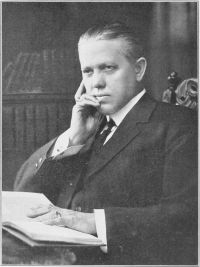
Jaroslav Egon Salaba-Vojan

Jaroslav Egon Salaba-Vojan

Summary

Portrait of Jaroslav Egon Salaba-Vojan Jaroslav Egon Salaba-Vojan The Czechoslovak Review (1918)

Mánes, who was familiar with the life of the nobility from his visits to the Castle Čechy, to which for twenty years he used to come just like to his old home, could readily compose these graceful works in which charming children play the role of their elders and bring home to us life in the castle in its most various and intimate forms. Children next to woman play an important part in the lifework of Mánes. But woman is the red strand in Mánes’ creation.
Mánes is the first Bohemian painter of woman.
Source: Wikisource

Portrait of Jaroslav Egon Salaba-Vojan Jaroslav Egon Salaba-Vojan The Czechoslovak Review (1917)

When Charles ascended the throne in 1346, Bohemia’s intellectual relations with Western Europe became very close, all the spiritual currents that moved men’s souls in France, England, and Italy, were felt here, and the Czech lands began to breathe the air of Europe. Charles gave art an important place in his court, and only two years after his accession a brotherhood of painters was founded in Prague.
Source: Wikisource

Portrait of Jaroslav Egon Salaba-Vojan Jaroslav Egon Salaba-Vojan The Czechoslovak Review (1918)

If it be true that up to the fifties the cultivation of arts in Bohemia was far from flourishing in originality, the explanation is found in this that at the beginning of the 19th century Bohemian art found itself under the tutelage of the contemporaneous German art, dry and tasteless, narrow-minded and doctrinaire. We may study the works of men, such as were the first directors of the Prague Academy, Bergler, Waldherr and Ruben, as we would study a historical curiosity, but we cannot admire them as works of art.
Source: Wikisource

Get perspective with Kwize: daily news enlightened by great literature