Summary

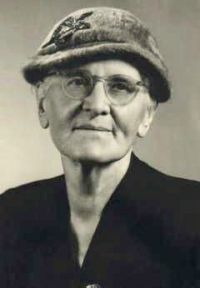
Portrait of Joanna C. Colcord Joanna C. Colcord Broken Homes: A Study of Family Desertion and its Social Treatment

As long as it survives, both man and wife feel in their inmost hearts that, no matter what his offense, to "take him to court" is treason against the intangible bonds that still hold between them. No matter how far apart they have drifted, or how unforgivable has been the deserter's offense, something irrevocable does happen to the fabric of marriage, a few poor shreds of which may still exist between the two, when his wife appears in a court of law to make complaint against him.
Source: Gutenberg

Portrait of Joanna C. Colcord Joanna C. Colcord Broken Homes: A Study of Family Desertion and its Social Treatment

The thing that sets desertion cases apart in a class of peculiar technical difficulty for the case worker is not simply that the man is away from his family. There is no man to deal with in a widow's family, but widows' families present comparatively simple problems. The deserter, though absent, is still not only a potential but also a real factor in the family situation. The plans of the family are often made with one eye to his return; he is the unseen but plainly felt obstacle to much that the social worker wants to accomplish.
Source: Gutenberg

Portrait of Joanna C. Colcord Joanna C. Colcord Broken Homes: A Study of Family Desertion and its Social Treatment

It is hardly conceivable that in any society, however primitive, there were not some real families—even when custom ran otherwise—in which marriage meant love and kindness and the mutual sharing of responsibilities. And these families, today as always, are the creators and preservers of the spiritual gains of the human race. It has been beautifully said of the family in such a form, that "it is greater than love itself, for it includes, ennobles, makes permanent, all that is best in love.
Source: Gutenberg

Get perspective with Kwize: daily news enlightened by great literature