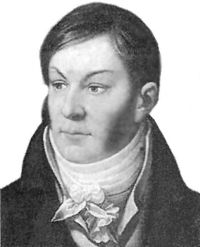
Johann August Apel

Johann August Apel

Summary

Portrait of Johann August Apel Johann August Apel Tales of the Dead (1813)

For my own part, my head and heart were full of the intended journey, and of the agreeable manner in which my time had passed at the count’s château. The images of those happy days crowded on my recollection; my imagination, at that time possessing all the vivacity of youth, was so much agitated, that I could not enjoy the sleep which already overpowered my friend. Emily’s image, so interesting by her sprightly grace, by her pure affection for me, was present to my mind like an amiable phantom shining in beauty.
Source: Wikisource

Portrait of Johann August Apel Johann August Apel Tales of the Dead (1813)

But for your good I have ordered to be committed to paper the cause of my chastisement, in order that you may learn that vengeance belongs to God alone, and not to men; for the most just amongst them knows not how to judge: and again, that you may not in your heart condemn me, but rather that you may pity me; for my misery has nearly equalled my crimes; and my spirit would never have dreamt of evil, if man had not rent my heart.”
“How justly,” exclaimed Ferdinand, “has Emily’s good sense divined thus much!”
Source: Wikisource

Portrait of Johann August Apel Johann August Apel Tales of the Dead (1813)

The chamber was lighted: Ferdinand opened the iron case; and the baron examined the old parchments.
“This,” cried he, after having searched some short time, “will inform us.” So saying, he drew from the chest some sheets of parchment. On the one which enveloped the rest was the portrait of a knight of an agreeable figure, and habited in the costume of the tenth century: and the inscription at the bottom called him Ditmar; but they could scarcely discover the slightest resemblance in it to the frightful portrait in the state-chamber.
Source: Wikisource

Get perspective with Kwize: daily news enlightened by great literature