Summary

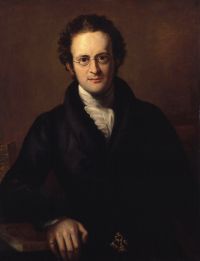
Portrait of John Bowring John Bowring A Visit to the Philippine Islands

Of the vegetation of the Philippines, the bamboo may be deemed the most extensive, the most useful, and the most beautiful. The graceful groups of Cañas (the Spanish name, the Tagál is Bocaui) are among the most charming decorations of the island scenery, and are scattered with great profusion and variety on the sides of the streams and rivers, on hills and plains, and always to be found adjacent to the residence of the native. Waving their light branches at the smallest breeze, they give perpetual life to the landscape, while they are of daily service to the people.
Source: Gutenberg

Portrait of John Bowring John Bowring A Visit to the Philippine Islands

The thick and many-tinted foliage of the mango—the tall bamboos shaking their feathery heads aloft—the cocoa-nut loftier still—the areca and the nipa palms—the plantains, whose huge green leaves give such richness to a tropical landscape—the bread-fruit, the papaya, and the bright-coloured wild-flowers, which stray at will over banks and branches—the river every now and then visible, with its canoes and cottages, and Indian men, women, and children scattered along its banks.
Source: Gutenberg

Portrait of John Bowring John Bowring A Visit to the Philippine Islands

For it is the condition, curse and condemnation of monopoly, that while it narrows the vision and cramps the intellect of the monopolist, it delivers the great interests of commerce to the guardianship of an inferior race of traders, excluding those higher qualities which are associated with commercial enterprise when launched upon the wide ocean of adventurous and persevering energy. How is the tree to reach its full growth and expansion whose branches are continually lopped off lest their shadows should extend, and their fruit fall for the benefit of others than its owner?
Source: Gutenberg

Get perspective with Kwize: daily news enlightened by great literature