Summary

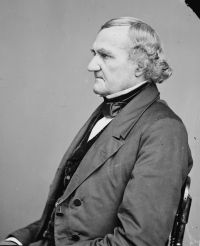
Portrait of John Catron John Catron Aspden v. Nixon — Opinion of the Court

The question now is, is the plea in bar sufficient, assuming its averments to be proved. We do not come here to dispute any general principle as to the conclusiveness of competent foreign judgments. It is a doctrine, in its general application, of 'repose,' and hence of high morality. It is not technical, as distinguished from reasonable. On the other hand, its application is sometimes exquisitely technical. A decree in chancery, dismissing a bill 'for want of evidence,' is a bar. A decree dismissing a bill 'for want of prosecution,' is no bar.
Source: Wikisource

Portrait of John Catron John Catron Aspden v. Nixon — Opinion of the Court

We here see, that, although equity may follow the law, and deal with a naked dismissal of a bill, 'for mere want of prosecution,' as a nonsuit, and hence no bar, yet that a dismissal of the other kind, such as, in the present case, the dismissal on hearing, and for want of proof, is a decree, and conclusive; and so the Court of Exchequer pronounced this very decree in chancery to be, and accorded to it the entire weight of res judicata
Source: Wikisource

Portrait of John Catron John Catron Aspden v. Nixon — Opinion of the Court

Justice Kent, I will now conclude, taking to myself no little shame for the great length and the too immethodical character of the observations I have made on this case,-a case, I confess, that has greatly interested me, because of the shameful delays that have been produced by the London Aspens,-a case, too, in which no legal alchemy, even, could extract a scintilla of evidence of right on their part! 'Every person is bound,' says Judge Kent, 'to take care of his own rights, and to vindicate them in due season, and in proper order.
Source: Wikisource

Get perspective with Kwize: daily news enlightened by great literature