Summary

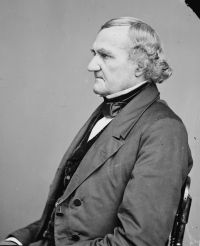
Portrait of John Catron John Catron La Roche v. Lessee of Jones — Opinion of the Court

Legal title, therefore, in Mary Jones there was clearly none, derived from the possession of John Ellis, or the confirmation to him. If it could be plausibly urged,-which it cannot,-that an equitable interest was vested in or inured to her by virtue of such possession and confirmation, it is insufficient to maintain her present action, which must rest on her establishing a legal and possessory title, complete in herself, at the time her suit was instituted.
Source: Wikisource

Portrait of John Catron John Catron La Roche v. Lessee of Jones — Opinion of the Court

South Carolina relinquished her claim by the treaty of Beaufort to Georgia. There being no other territory in the United States than that of some one of the confederated States, the general government very properly abandoned its claim, and recognized the complete title in Georgia, by taking a cession of the country from that State. It has always been held by every department of the government, that the title and jurisdiction over this country was in Georgia alone, until this act of cession
Source: Wikisource

Portrait of John Catron John Catron La Roche v. Lessee of Jones — Opinion of the Court

There is no evidence whatever to show that any title, legal or equitable, in Mary Jones, was supposed to exist, or was in any manner recognized as existing, by the board of commissioners or by Congress. The law of Mississippi, at the time when this action of ejectment at law was instituted, positively declared that the perfect legal title was vested in John Ellis and his heirs, under the certificate of confirmation from the board of commissioners, ratified by Congress.
Source: Wikisource

Get perspective with Kwize: daily news enlightened by great literature