Summary

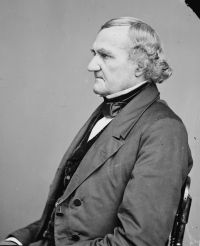
Portrait of John Catron John Catron Marsh v. Brooks (49 U.S. 223)…

It is for the officers of government to say when land shall be reserved, and what is so reserved. Indian affairs belong to the political department. The United States deal with Indian titles in their political and sovereign capacity. It is for the land officers to decide on facts on which a patent is to issue.
Source: Wikisource

Portrait of John Catron John Catron Marsh v. Brooks (49 U.S. 223)…

From the foregoing statement it appears that, by refusing to give the first, fifth, and seventh instructions, the court below decided that the patent obtained from the United States by Reddick's heirs was a better title than the reservation to the Sac and Fox half-breeds.
The patent of 1839, was, prim a facie, a conclusive title; but by the treaty of 1824, with the Sac and Fox Indians, the land in dispute was admitted by the United States to lie within the territory ceded by the treaty; and the Indian title, such as it was before the treaty, is reserved to the half-breeds.
Source: Wikisource

Portrait of John Catron John Catron Marsh v. Brooks (49 U.S. 223)…

II. The outstanding title set up by the plaintiffs in error in the court below, under the treaty and law of June 30, 1834, does not necessarily negative a title in the United States at the date of the patent.
It must be a clear subsisting title outstanding in another, to defeat a plaintiff in ejectment, and that means such a title as the stranger could recover on in ejectment against either of the contending parties.
Source: Wikisource

Get perspective with Kwize: daily news enlightened by great literature