Summary

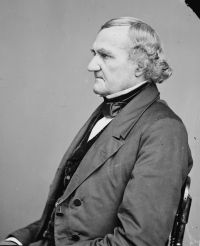
Portrait of John Catron John Catron Pollard v. Hagan — Dissent

At New Orleans, and at most other places fronting rivers where the tide ebbs and flows, as well as on the ocean and great lakes, navigation is facilitated by similar means; without their employment few city fronts could be formed, at all accommodated to navigation and trade. To this end private ownership is indispensable and universal; and some one must make title. If the United States have no power to do so, who has? I repeat, can Alabama grant the soil? She disavowed all claim and title to and in it, as a condition on which Congress admitted her into the union.
Source: Wikisource

Portrait of John Catron John Catron Pollard v. Hagan — Dissent

If the state where the land lies was the owner the same course would have to be pursued. The states and the United States are not in hostility; the people of the one are also the people of the other; justice and donation is alike due from each.
Connecticut was once a large proprietor in the North-West Territory, (now Ohio.) She owned the shores of a great lake and the banks of navigable rivers: Can it be assumed that the admission of Ohio defeated the title of Connecticut, and that she could not grant?
Source: Wikisource

Portrait of John Catron John Catron Pollard v. Hagan — Dissent

It follows, if the United States cannot grant these lands, neither can Alabama; and no individual title to them can ever exist. And to this conclusion, as I understand the reasoning of the principal opinion, the doctrine of a majority of my brethren mainly tends. The assumption is, that flowed lands, including mud-flats, extending to navigable waters, are part of such waters, and clothed with a sovereign political right in the state; not as property, but as a sovereign incident to navigation, which belongs to the political jurisdiction
Source: Wikisource

Get perspective with Kwize: daily news enlightened by great literature