Summary

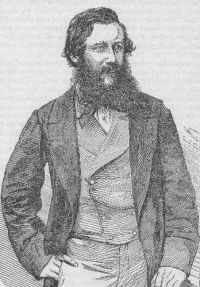
Portrait of John Hanning Speke John Hanning Speke What Led to the Discovery of the Source of the Nile

Indeed, for tropical scenery, there are few places that could equal this; and if the traveller, as he moves along, surrounded by the screeching, howling, inquisitive savages, running rudely about and boisterously jostling him, could only divest himself of the idea that he is a bear baited by a yelping pack of hounds, the journey would be replete with enjoyment.
Crossing some hills, the caravan sprang a covey of guinea-fowls, and at some springs in a valley I shot several couple of sand-grouse, darker in plumage than any I ever saw in Africa or India, and not quite so big as the Tibet bird.
Source: Gutenberg

Portrait of John Hanning Speke John Hanning Speke What Led to the Discovery of the Source of the Nile

There whole villages are destroyed in the most remorseless manner by the slave-hunters to obtain their victims, for no one will yield so long as he can fight for his freedom. The slave-hunters are not merely confined to the coast men, for the interior chiefs are as fond of gain as they are, and this sets one against the other until the whole country is in a flame. It is true that the slaves whom the Arab merchants, or other men, have in their possession, never forsake their master, as if they disliked their state in bondage
Source: Gutenberg

Portrait of John Hanning Speke John Hanning Speke What Led to the Discovery of the Source of the Nile

When I was sailing down the Nile, I could not help remarking to all the pashas I visited how strange it appeared that men so civilised as they were should be living in such a barren, hot, and glaring land as Egypt, when the negroes on the equator were absolutely living in the richest and pleasantest garden in the world, so far as nature has made the two countries.
Source: Gutenberg

Get perspective with Kwize: daily news enlightened by great literature