Summary

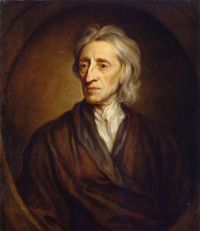
Portrait of John Locke John Locke,  An Essay Concerning Human Understanding…

“ These simple ideas, I say, of thinking, motion, and power, have been those which have been most modified ; and out of whose modifications have been made most complex modes, with names to them. For action being the great business of mankind, and the whole matter about which all laws are conversant, it is no wonder that the several modes of thinking and motion should be taken notice of, the ideas of them observed, and laid up in the memory, and have names assigned to them ; without which laws could be but ill made, or vice and disorders repressed. ”
Source: Wikisource

Portrait of John Locke John Locke,  An Essay Concerning Human Understanding…

“ That the mind, in respect of its simple ideas, is wholly passive, and receives them all from the existence and operations of things, such as sensation or reflection offers them, without being able to make any one idea, experience shows us. But if we attentively consider these ideas I call mixed modes, we are now speaking of, we shall find their original quite different. The mind often exercises an active power in making these several combinations. ”
Source: Wikisource

Portrait of John Locke John Locke,  An Essay Concerning Human Understanding…

“ For, having by sensation and reflection stored our minds with simple ideas, and by use got the names that stand for them, we can by those means represent to another any complex idea we would have him conceive ; so that it has in it no simple ideas but what he knows, and has with us the same name for. For all our complex ideas are ultimately resolvable into simple ideas, of which they are compounded and originally made up, though perhaps their immediate ingredients, as I may so say, are also complex ideas. ”
Source: Wikisource

Get perspective with Kwize: daily news enlightened by great literature