Summary

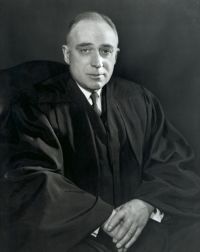
Portrait of John Marshall Harlan II John Marshall Harlan II Lerner v. Casey — Opinion of the Court

But New York's right to enact legislation to protect its public service against the employment of persons fairly deemed untrustworthy and unreliable, and therefore security risks, can hardly be regarded as constitutionally dependent upon the existence of a public emergency, and we do not think it open to us to inquire into the motives which led the State Legislature to extend the Security Risk Law beyond its original effective period.
Source: Wikisource

Portrait of John Marshall Harlan II John Marshall Harlan II Lerner v. Casey — Opinion of the Court

The Court of Appeals went on to reason that had appellant refused, without more, to answer the question, the finding of 'doubtful trust and reliability' would have undoubtedly been permissible, and that the basis for such a finding, in appellant's refusal to answer, was not destroyed by the claim of the Fifth Amendment privilege because the Commissioner was not required to accept that claim as an adequate explanation of the refusal.
Accepting, as we do, these premises of the state court's opinion, we find no constitutional block to its decision sustaining appellant's dismissal from employment.
Source: Wikisource

Portrait of John Marshall Harlan II John Marshall Harlan II Lerner v. Casey — Opinion of the Court

Certainly it is not a controlling constitutional distinction that New York, rather than impose on employees, as in Garner and Beilan, an absolute duty to respond to permissible inquiry upon threat of dismissal for refusal, has in these proceedings held that an employee lacking in candor to his governmental employer evidences doubt as to his trust and reliability.
Source: Wikisource

Get perspective with Kwize: daily news enlightened by great literature