Summary

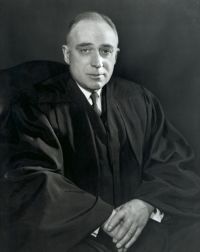
Portrait of John Marshall Harlan II John Marshall Harlan II Republic Steel Corporation v. Maddox…

A contrary rule which would permit an individual employee to completely sidestep available grievance procedures in favor of a lawsuit has little to commend it. In addition to cutting across the interests already mentioned, it would deprive employer and union of the ability to establish a uniform and exclusive method for orderly settlement of employee grievances. If a grievance procedure cannot be made exclusive, it loses much of its desirability as a method of settlement.
Source: Wikisource

Portrait of John Marshall Harlan II John Marshall Harlan II Republic Steel Corporation v. Maddox…

Severance pay and other contract terms governing discharge are of obvious concern to all employees, and a potential cause of dispute so long as any employee maintains a continuing employment relationship. Only in the situation in which no employees represented by the union remain employed, as would be the case with a final and permanent plant shutdown, is there no possibility of a work stoppage resulting from a severance-pay claim.
Source: Wikisource

Portrait of John Marshall Harlan II John Marshall Harlan II Republic Steel Corporation v. Maddox…

The language stating that an employee 'may discuss' a complaint with his foreman is susceptible to variout interpretations; the most likely is that an employee may, if he chooses, speak to his foreman himself without bringing in his grievance committeeman and formally embarking on Step 1. Use of the permissive 'may' does not of itself reveal a clear understanding between the contracting parties that individual employees, unlike either the union or the employer, are free to avoid the contract procedure and its time limitations in favor of a judicial suit.
Source: Wikisource

Get perspective with Kwize: daily news enlightened by great literature