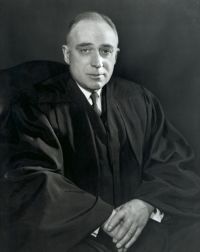
John Marshall Harlan II

John Marshall Harlan II

Summary

Portrait of John Marshall Harlan II John Marshall Harlan II Shapiro v. Thompson — Dissent (1969)

When the right affected is one assured by the Federal Constitution, any infringement can be dealt with under the Due Process Clause. But when a statute affects only matters not mentioned in the Federal Constitution and is not arbitrary or irrational, I must reiterate that I know of nothing which entitles this Court to pick out particular human activities, characterize them as 'fundamental,' and give them added protection under an unusually stringent equal protection test.
Source: Wikisource

Portrait of John Marshall Harlan II John Marshall Harlan II Shapiro v. Thompson — Dissent (1969)

I shall consider in the next section whether welfare residence requirements deny due process by unduly burdening the right of interstate travel. If the issue is regarded purely as one of equal protection, then, for the reasons just set forth, this nonracial classification should be judged by ordinary equal protection standards. The applicable criteria are familiar and well established. A legislative measure will be found to deny equal protection only if 'it is without any reasonable basis, and therefore is purely arbitrary.' Lindsley v.
Source: Wikisource

Portrait of John Marshall Harlan II John Marshall Harlan II Shapiro v. Thompson — Dissent (1969)

In reaching tha conclusion, I do not minimize the importance of the right to travel interstate. However, the impact of residence conditions upon that right is indirect and apparently quite insubstantial. On the other hand, the governmental purposes served by the requirements are legitimate and real, and the residence requirements are clearly suited to their accomplishment. To abolish residence requirements might well discourage highly worthwhile experimentation in the welfare field.
Source: Wikisource

Get perspective with Kwize: daily news enlightened by great literature