Summary

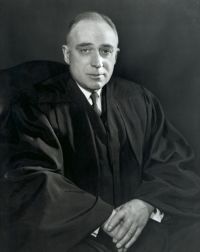
Portrait of John Marshall Harlan II John Marshall Harlan II United States v. Louisiana (389 U.S. 155…

The problem before us here-where the boundary of Texas is must be answered by determining where 'three leagues from land' now is, for Texas has no historic boundary claim at all unless it is to 'three leagues from land.' The question is one that the Court does not even reach: should the words 'from land' be taken, today, to refer to the shoreline in 1836, or 1845, or to the present shoreline, and, if to the last of these, should 'land' include artificial accretions built upon the land?
Source: Wikisource

Portrait of John Marshall Harlan II John Marshall Harlan II United States v. Louisiana (389 U.S. 155…

The United States here contends that because the outermost harbor-works principle had not been articulated in 1836 or 1845, it should not now be a basis for interpreting the Republic of Texas Boundary Act. The premise of this contention is sound: an ancient statute should ordinarily be interpreted in light of the doctrines prevailing at the time it was passed, rather than of subsequent changes in governing principles.
Source: Wikisource

Portrait of John Marshall Harlan II John Marshall Harlan II United States v. Louisiana (389 U.S. 155…

The next question is whether the 'land' whose present location is the base line from which to measure Texas' historic claim to 'three leagues' includes artificial extensions of land such as the jetties that are at issue in this case. There can be no doubt, as the Court's opinion recognizes, that any maritime boundary established today would be taken to incorporate existing artificial structures of the kind built on the Texas coast and to be ambulatory with any such future artificial accretions.
Source: Wikisource

Get perspective with Kwize: daily news enlightened by great literature