Summary

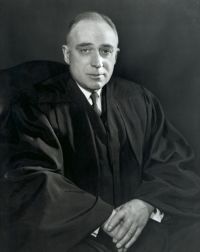
Portrait of John Marshall Harlan II John Marshall Harlan II United States v. Western Pacific Railroad Company…

To use the statute of limitations to cut off the consideration of a particular defense in the case is quite foreign to the policy of preventing the commencement of stale litigation. We think it would be incongruous to hold that once a lawsuit is properly before the court, decision must be made without consideration of all the issues in the case and without the benefit of all the applicable law.
Source: Wikisource

Portrait of John Marshall Harlan II John Marshall Harlan II United States v. Western Pacific Railroad Company…

We are told that the Government can protect itself, when it believes it has been charged an unreasonable rate, by filing an affirmative claim for reparations with the Commission within the two-year period provided by § 16 (3) . But Congress has relieved the Government from filing such anticipatory suits by expressly authorizing the General Accounting Office to deduct overpayments from subsequent bills of the carrier if, on post-audit, it finds that the United States has been overcharged.
Source: Wikisource

Portrait of John Marshall Harlan II John Marshall Harlan II United States v. Western Pacific Railroad Company…

Whether steel casings filled with napalm gel are incendiary bombs is, in this context, more than simply a question of reading the tariff language or applying abstract 'rules' of construction. For the basic issue is how far the reasons justifying a high rate for the carriage of extra-hazardous objects were applicable to the instant shipment. Do the factors which make for high costs and therefore high rates on incendiary bombs also call for a high rate on steel casings filled with napalm gel?
Source: Wikisource

Get perspective with Kwize: daily news enlightened by great literature