Summary

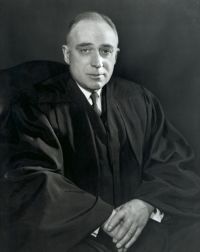
Portrait of John Marshall Harlan II John Marshall Harlan II United States v. White (401 U.S. 745…

Since it is the task of the law to form and project, as well as mirror and reflect, we should not, as judges, merely recite the expectations and risks without examining the desirability of saddling them upon society. The critical question, therefore, is whether under our system of government, as reflected in the Constitution, we should impose on our citizens the risks of the electronic listener or observer without at least the protection of a warrant requirement.
Source: Wikisource

Portrait of John Marshall Harlan II John Marshall Harlan II United States v. White (401 U.S. 745…

Interposition of a warrant requirement is designed not to shield 'wrongdoers,' but to secure a measure of privacy and a sense of personal security throughout our society.
The Fourth Amendment does, of course, leave room for the employment of modern technology in criminal law enforcement, but in the stream of current developments in Fourth Amendment law I think it must be held that third-party electronic monitoring, subject only to the self-restraint of law enforcement officials, has no place in our society.
Source: Wikisource

Portrait of John Marshall Harlan II John Marshall Harlan II United States v. White (401 U.S. 745…

This question must, in my view, be answered by assessing the nature of a particular practice and the likely extent of its impact on the individual's sense of security balanced against the utility of the conduct as a technique of law enforcement. For those more extensive intrusions that significantly jeopardize the sense of security which is the paramount concern of Fourth Amendment liberties, I am of the view that more than self-restraint by law enforcement officials is required and at the least warrants should be necessary.
Source: Wikisource

Get perspective with Kwize: daily news enlightened by great literature