Summary

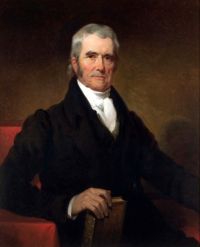
Portrait of John Marshall John Marshall Smith v. Bell — Opinion of the Court

No rule is better settled, than that the whole will is to be taken together, and is to be so construed as to give effect, if it be possible, to the whole. Either the last member of the sentence must be totally rejected, or it must influence the construction of the first so as to restrain the natural meaning of its words: either the bequest to the son must be stricken out, or it must limit the bequest to the wife, and confine it to her life. The limitation in remainder, shows that, in the opinion of the testator, the previous words had given only an estate for life.
Source: Wikisource

Portrait of John Marshall John Marshall Smith v. Bell — Opinion of the Court

The words 'the remainder of said estate, after her decease, to be for the use of the said Jesse Goodwin,' are, we think, equivalent. They manifest with equal clearness the intent to limit the estate given to her, to her life, and ought to have the same effect. They are totally inconsistent with an estate in the wife, which is to endure beyond her life.
Notwithstanding the reasonableness and good sense of this general rule, that the intention shall prevail, it has been some times disregarded. If the testator attempts to effect that which the law forbids, his will must yield to the rules of law.
Source: Wikisource

Get perspective with Kwize: daily news enlightened by great literature