Summary

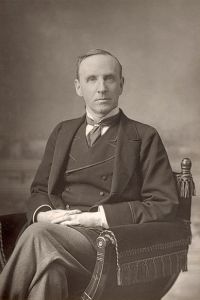
Portrait of John Morley John Morley Critical Miscellanies (Vol. 3 of 3…

If you seek to place yourself in sympathy with Comte it is best to think of him only as the intellectual worker, pursuing in uncomforted obscurity the laborious and absorbing task to which he had given up his whole life. His singularly conscientious fashion of elaborating his ideas made the mental strain more intense than even so exhausting a work as the abstract exposition of the principles of positive science need have been, if he had followed a more self-indulgent plan.
Source: Gutenberg

Portrait of John Morley John Morley Critical Miscellanies (Vol. 3 of 3…

It is no doubt the worst kind of cynicism to make a mock in a realistic vein of any personality that has set in motion the idealising thaumaturgy of the affections. Yet we cannot help feeling that it is a grotesque and unseemly anachronism to apply in grave prose, addressed to the whole world, those terms of saint and angel which are touching and in their place amid the trouble and passion of the great mystic poet.
Source: Gutenberg

Portrait of John Morley John Morley Critical Miscellanies (Vol. 3 of 3…

Hitherto Comte's Utopia has pleased the followers of the Catholic, just as little as those of the scientific spirit.
The elaborate and minute systematisation of life, proper to the religion of Humanity, is to be directed by a priesthood. The priests are to possess neither wealth nor material power; they are not to command, but to counsel; their authority is to rest on persuasion, not on force. When religion has become positive and society industrial, then the influence of the church upon the state becomes really free and independent, which was not the case in the Middle Age.
Source: Gutenberg

Get perspective with Kwize: daily news enlightened by great literature