Summary

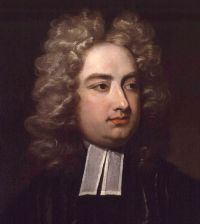
Portrait of Jonathan Swift Jonathan Swift An Argument Against Abolishing Christianity (1708)

For as long as we leave in being a God and His Providence, with all the necessary consequences which curious and inquisitive men will be apt to draw from such promises, we do not strike at the root of the evil, though we should ever so effectually annihilate the present scheme of the Gospel; for of what use is freedom of thought if it will not produce freedom of action, which is the sole end, how remote soever in appearance, of all objections against Christianity?
Source: Wikisource

Portrait of Jonathan Swift Jonathan Swift An Argument Against Abolishing Christianity (1708)

And to urge another argument of a parallel nature: if Christianity were once abolished, how could the Freethinkers, the strong reasoners, and the men of profound learning be able to find another subject so calculated in all points whereon to display their abilities? What wonderful productions of wit should we be deprived of from those whose genius, by continual practice, hath been wholly turned upon raillery and invectives against religion, and would therefore never be able to shine or distinguish themselves upon any other subject?
Source: Wikisource

Portrait of Jonathan Swift Jonathan Swift An Argument Against Abolishing Christianity (1708)

Would any indifferent foreigner, who should read the trumpery lately written by Asgil, Tindal, Toland, Coward, and forty more, imagine the Gospel to be our rule of faith, and to be confirmed by Parliaments? Does any man either believe, or say he believes, or desire to have it thought that he says he believes, one syllable of the matter? And is any man worse received upon that score, or does he find his want of nominal faith a disadvantage to him in the pursuit of any civil or military employment?
Source: Wikisource

Get perspective with Kwize: daily news enlightened by great literature