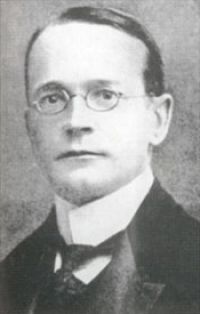
 Joseph McCabe,
The Human Origin of Morals — Chapter VII. Moral Law Is Social Law
Joseph McCabe,
The Human Origin of Morals — Chapter VII. Moral Law Is Social Law
“ You cannot, on Agnostic principles, maintain the fine "self-regarding virtues," it was said to Rationalists. Since a self-regarding virtue obviously means one that does not affect our fellows, for good or evil, how could we urge it on social principles?In the first place, we could not enforce it, we should have little force even in urging it upon the mass of mankind, but we could maintain it without the least inconsistency. It is possible for any group of men and women to set up a standard of character which they think admirable, and maintain it because they think it admirable. ”
