Summary

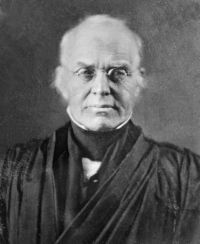
Portrait of Joseph Story Joseph Story,  Browning v. Carroll — Opinion of the Court

“ If there had not been provincial laws to regulate the barring of entails, it might have been proper to have supported the mode of barring by fines and recoveries in England. The necessity of the case might, perhaps, have justified it. But the provincial laws do not apply to the seignory and proprietorship of Maryland. The question as to them is entirely new, and of great difficulty. The pains taken to show, that a recovery might have been suffered in the Court of the Castle of Windsor, proves the force of the argument of necessity as to barring by alienation. ”
Source: Wikisource

Portrait of Joseph Story Joseph Story,  Browning v. Carroll — Opinion of the Court

“ Without dwelling upon the known principles of the paramount and omnipotent authority over private rights and authorities, which is often attributed to Parliament, it may be justly said, that it is competent for the legislature, upon the application, and with the consent of all the parties in interest, to give a legal and conclusive effect to their own agreements, and to pass that at law, which the parties, in the most unreserved manner, intended to pass. ”
Source: Wikisource

Portrait of Joseph Story Joseph Story,  Browning v. Carroll — Opinion of the Court

“ The tenure, then, being as of the castle of Windsor, the Province is to be considered in the same way as other lands originally holden of the castle, and, like other fiefs, is to be impleadable within the manor. A castle, or honour, is only a superior kind of manor. To every manor a Court Baron is necessarily incident, and, therefore, it is so to every castle. The jurisdiction of a Court Baron is well known. Without the king's writ, it holds plea of personal actions where the demand doth not amount to 40 shillings. With the king's writ of right, it may hold plea of land. ”
Source: Wikisource

Get perspective with Kwize: daily news enlightened by great literature