Summary

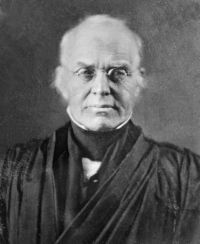
Portrait of Joseph Story Joseph Story Magniac v. Thomson — Opinion of the Court

It is a question of fact, which a court cannot compel a jury to qualify. The morality which pervades all law, and which is the law itself, prohibits all fraud, not merely a combination of fraud, and it considers the slightest notice as the fullest participation. Edward Thomson's enormous failure, shortly before the settlement, involving John R. Thomson, must have excited suspicion and inquiry; and the fact is, and such was the plaintiffs' argument on the trial, that Mr. Stockton repudiated the settlement, satisfied, as he must have become, of its invalidity.
Source: Wikisource

Portrait of Joseph Story Joseph Story Magniac v. Thomson — Opinion of the Court

Let our judgment be what it may, as to the law, it can do harm to no one, without their sanction; with their approbation, a safe rule of titles and property will be established; your judgment might not lead to one so sound or permanent. Much of what you have heard, has been repeated from the adjudications of that court, much from those of England, their judges and chancellors, whose judgments, decrees and opinions have been carefully reviewed and approved by the pure and eminent jurists who have presided in our own courts.
Source: Wikisource

Portrait of Joseph Story Joseph Story Magniac v. Thomson — Opinion of the Court

There was no contract for a marriage-settlement, until a month after the defendant, through his agent, contracted the debt in question to the plaintiffs. The property settled is enough to pay the debt; so that the marriage-settlement is the only hindrance, and the question is, whether it is an insuperable legal impediment? The philosophy of the law on this subject is simple honesty-to give every one his own. The English common law, which is our law, differs from the law of all the rest of the civilized world, in identifying the wife with the husband.
Source: Wikisource

Get perspective with Kwize: daily news enlightened by great literature