Summary

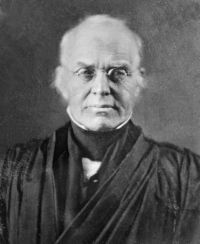
Portrait of Joseph Story Joseph Story Wilkinson v. Leland — Opinion of the Court

The fundamental maxims of a free government seem to require, that the rights of personal liberty and private property should be held sacred. At least no court of justice in this country would be warranted in assuming, that the power to violate and disregard them; a power so repugnant to the common principles of justice and civil liberty lurked under any general grant of legislative authority, or ought to be implied from any general expressions of the will of the people.
Source: Wikisource

Portrait of Joseph Story Joseph Story Wilkinson v. Leland — Opinion of the Court

The legislature always has acted as the emergency presented. Whom do they injure? They do not infringe their own constitution; and when they do so, it is for the people of the state to interfere. They do nothing which is contrary to the constitution of the United States.
If the legislature of Rhode Island possessed the power to order a sale, why not have power to confirm the sale? There is no exercise of a greater power here. A court of probate might not do it, but that court is limited in its powers. A subsequent ratification is equivalent to a prior authority.
Source: Wikisource

Portrait of Joseph Story Joseph Story Wilkinson v. Leland — Opinion of the Court

Even if such authority could be deemed to have been confided by the charter to the general assembly of Rhode Island, as an exercise of transcendental sovereignty before the revolution, it can scarcely be imagined that that great event could have left the people of that state subjected to its uncontrolled and arbitrary exercise. That government can scarcely be deemed to be free, where the rights of property are left solely dependent upon the will of a legislative body, without any restraint.
Source: Wikisource

Get perspective with Kwize: daily news enlightened by great literature