Summary

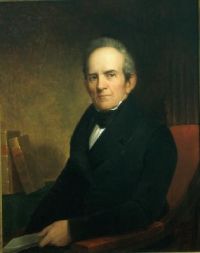
Portrait of Smith Thompson Smith Thompson Peter v. Beverly — Opinion of the Court

It is not a power coupled with an interest in executors, because they may derive a personal benefit from the devise. For a trust will survive though no way beneficial to the trustee. It is the possession of the legal estate, or a right in the subject over which the power is to be exercised, that makes the interest in question. And when an executor, guardian, or other trustee, is invested with the rents and profits of land, for the sale or use of another; it is still an authority coupled with an interest, and survives.
Source: Wikisource

Portrait of Smith Thompson Smith Thompson Peter v. Beverly — Opinion of the Court

And courts of equity will lend their aid to uphold the power, for the purpose of carrying into execution the intention of the testator, and preventing the consequences that might result from an extinction of the power: and where there is a trust, charged upon the executors in the direction given to them in the disposition of the proceeds, it is the settled doctrine of courts of chancery, that the trust does not become extinct by the death of one of the trustees.
Source: Wikisource

Portrait of Smith Thompson Smith Thompson Peter v. Beverly — Opinion of the Court

It may, perhaps, be considered as the better conclusion to be drawn from the English cases on this question, that a mere direction, in a will, to the executors to sell land, without any words vesting in them an interest in the land, or creating a trust, will be only a naked power, which does not survive. In such case, there is no one who has a right to enforce an execution of the power. But when any thing is directed to be done, in which third persons are interested, and who have a right to call on the executors to execute the power, such power survives.
Source: Wikisource

Get perspective with Kwize: daily news enlightened by great literature