Summary

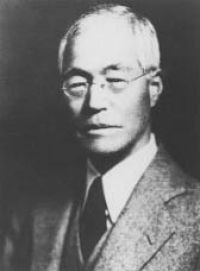
Portrait of Kan'ichi Asakawa Kan'ichi Asakawa The Russo-Japanese Conflict: Its Causes and Issues

For Japan, Korea is nothing short of one half of her vitality. By the opening or closing, strength or weakness, independence or fall, of Korea, would Japan’s fate as a nation be decided. On the contrary, Russia, with Manchuria and ultimately Korea in her hands, would be able, on the one hand, to build up under her exclusive policy a naval and commercial influence strong enough to enable her to dominate the East, and, on the other, to cripple forever Japan’s ambition as a nation, slowly drive her to starvation and decay, and even politically annex her.
Source: Gutenberg

Portrait of Kan'ichi Asakawa Kan'ichi Asakawa The Russo-Japanese Conflict: Its Causes and Issues

Eight days have now elapsed since all Russia was shaken with profound indignation against an enemy who suddenly broke off negotiations, and, by a treacherous attack, endeavored to obtain an easy success in a war long desired. The Russian nation, with natural impatience, desires prompt vengeance, and feverishly awaits news from the Far East. The unity and strength of the Russian people leave no room for doubt that Japan will receive the chastisement she deserves for her treachery and her provocation of war at a time when our beloved Sovereign desired to maintain peace among all nations.
Source: Gutenberg

Portrait of Kan'ichi Asakawa Kan'ichi Asakawa The Russo-Japanese Conflict: Its Causes and Issues

It was England, a naval folk and a new Power, that struck at Spain three centuries ago, and by that brave adventure not only won wealth and prestige for herself, but rid Europe of a great menace. It is Japan, also a naval race and a new—so far as Continental history is concerned—that strikes at Russia and hopes by her success both to avert the undoing of the ancient states about her and to establish herself as mistress in her own waters.
Source: Gutenberg

Get perspective with Kwize: daily news enlightened by great literature