Summary

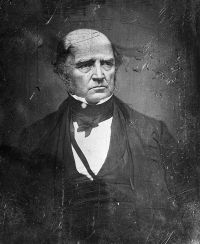
Portrait of Levi Woodbury Levi Woodbury Town of East Hartford v. Hartford Bridge Company…

Is the original grant to the town of Hartford to be presumed from the user, by which alone it is proved, to have been made for any longer period than the public convenience might require? Is it to be presumed that a public corporation, itself created for the promotion of the public interest, subject to be divided or dissolved at the pleasure of the General Assembly, was vested with a power of perpetuating a ferry after it had become prejudicial to the public, and against the will of the supreme power of the state?
Towns are not established by contract with the inhabitants.
Source: Wikisource

Portrait of Levi Woodbury Levi Woodbury Town of East Hartford v. Hartford Bridge Company…

Thus, for example, when a state is admitted to be formed out of a territory, the property in the land is in the United States and its grantees, the eminent domain is in the state; or, in other words, the right of civil government. The right is as absolute as the necessity which calls for its exercise. The duty to make compensation is to be regulated by the sense of justice of the sovereign power, or by the constitution of the state.
Source: Wikisource

Portrait of Levi Woodbury Levi Woodbury Town of East Hartford v. Hartford Bridge Company…

In the latter case, the road, abutments, bridge, and franchise were taken for public use with compensation. But here the legislature suspends the ferries for the benefit of the bridge company. If I enter into a contract with a man, can the legislature take away that contract? If it be an executed contract, can the sovereign take away the fruits of it? Here, however, the legislature does not pretend to take away the grant, but to alter its provisions, and to alter them not for its own benefit, but for that of another.
Source: Wikisource

Get perspective with Kwize: daily news enlightened by great literature