Summary

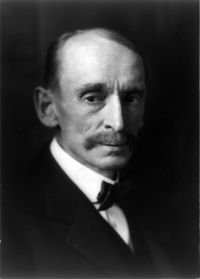
Portrait of William R. Day William R. Day Blair v. Chicago — Opinion of the Court

The theory that the franchise to use the streets was derived solely from the state, subject only to the right of the city to designate the streets to be occupied, and to regulate the 'administrative' features of the use, was adopted by the learned circuit court in construing the act in controversy. It is therefore important to consider the nature of the franchises, licenses, rights, and privileges dealt with in the act of 1865, to ascertain, as near as may be, in what sense its terms were used, and with what meaning they are incorporated into the act.
Source: Wikisource

Portrait of William R. Day William R. Day Blair v. Chicago — Opinion of the Court

Section two of the law (act of 1865) expressly gives the power of amendment, in providing that 'it shall be competent for the said common council, with the written consent or concurrence of the other party or parties or their assigns to any of said contracts, stipulations, licenses, or undertakings, to amend, modify, or annul the same.' We think this grant of power was broad enough to authorize the city to grant, and the railway company to accept, a changed method of operation of the railways by applying thereto a new and more efficient and economical power.
Source: Wikisource

Portrait of William R. Day William R. Day Blair v. Chicago — Opinion of the Court

So enormous a grant of privileges, including an exclusion from some streets of any railway system, ought not to be presumed or held to be conferred in doubtful and ambiguous words. Grants of this character are not to be destroyed by an unreasonable or narrow interpretation. But if ambiguity is fatal to such claim of rights as against the public, for the stronger reason must such grants of far-reaching and exclusive privileges as are here asserted fail when they can only be maintained by strained construction in their favor.
Source: Wikisource

Get perspective with Kwize: daily news enlightened by great literature