Summary

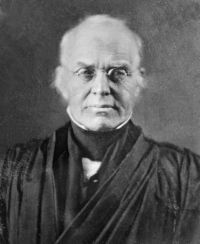
Portrait of Joseph Story Joseph Story The Town of Pawlet v. Daniel Clark…

All is the other way. How can it be imagined, that the intention was to convey an estate in trust to a large number of individuals, who were to be, at first, tenants in common-then, to divide and hold in severalty-and whose estates, by law, would descend, in gavel-kind, to their heirs? Was B. Wentworth to be a trustee, whose estate was severed by the charter itself? Was the corporation in England to be one of the trustees? It is hardly necessary to add that the Court would not very willingly construe this grant so as to raise a trust, which from the nature of the case never could be executed.
Source: Wikisource

Portrait of Joseph Story Joseph Story The Town of Pawlet v. Daniel Clark…

It would be absurd to consider any number of Episcopalians, formed into a society in Vermont, as standing in the place of a parish, and capable, contrary to the doctrine of the common law under which they must derive, of succeeding to the freehold of a glebe, or of taking and holding by succession or otherwise, by or under a grant of lands for a glebe, made by the king of Great Britain before the revolution.
Source: Wikisource

Portrait of Joseph Story Joseph Story The Town of Pawlet v. Daniel Clark…

At the time of the grant, therefore, there was not only no church of England established by law, but in the town of Pawlet there was no organ of that or any other church, capable of taking the share in question.
The grant, of course, could not take effect; and the revolution has rendered it utterly imposible that it ever can take effect agrecable to the intention of the donor. By the revolution we have become completely severed from the church of England as by law established.
Source: Wikisource

Get perspective with Kwize: daily news enlightened by great literature